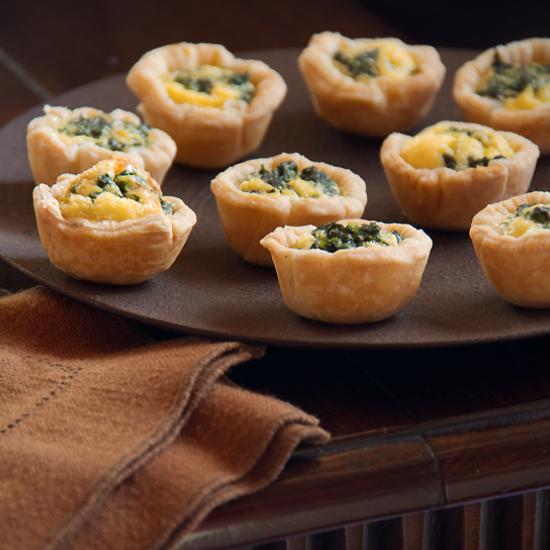
Kale and Shallot Mini-Quiche make perfect little party bites. Quiche is a very forgiving preparation which means at least that part of the party can be stress free.
Be careful not to overfill. It will make these little guys nearly impossible to remove from the pin.

Ingredients
- flour (as needed for rolling)
- 2 pie dough discs (about 5 inches round and 3/4‑inch thick) home made or store bought
- 6 ounce baby kale
- 1 tablespoon olive oil
- 2 shallots (peeled and thinly sliced)
- 3 large eggs
- 1 cup heavy cream
- ¼ cup milk
- ¼ teaspoon kosher salt (plus more for boiling and seasoning)
- 1 pinch grated nutmeg
- 1 pinch cayenne pepper (optional)
- 3 tablespoon finely grated Gruyère cheese (or similar)
Directions
Preheat oven to 325 degrees F.
On a lightly floured surface, roll out one disc of pie dough to about 1/8 inch thick. Cut into twelve 3‑inch rounds, re-rolling scraps if necessary. Line one twelve unit mini-muffin tin with the rounds. Tuck a mini-muffin parchment liner over the dough and place a few beans or a teaspoon of rice inside to prevent the dough from shrinking or becoming misshapen. Repeat with second disc, giving you 24 pastry shells.
Bake in the heated oven until the dough is set, about 8 minutes. Carefully remove liners and weights, then bake an additional 2 minutes to dry the surface of the dough. Remove from oven and set aside. Leave the oven on.
Meanwhile, bring a medium pot of lightly salted water to a boil. Stir in kale, and cook until wilted, about 2 minutes, Drain kale, squeezing out as much excess water as possible, then roughly chop. Place kale in a medium bowl.
In a medium saucepan, heat the olive oil over medium-high heat. Saute the shallots until soft and just beginning to color, about 6 minutes. Add the shallots to the bowl with the kale. Season to taste with salt.
In a separate large bowl whisk together eggs, cream, milk, ¼ teaspoon salt, nutmeg and cayenne (if using).
Lay both lined mini-muffin tins on a rimmed baking sheet. Distribute the cooked kale mixture between each of the lined mini-muffin cups; sprinkle some Gruyère on top. Spoon enough egg mixture into each to come almost to the top of the crust. Carefully move the baking sheet and mini-muffin tins to the heated oven and bake until the custard has set and the crust has browned, about 30 minutes, rotating the sheet halfway through cooking. Serve warm or at room temperature.
I can’t think of a better combination for mini-quiches! Mouthwatering!